
Carl R. Darnall Army Medical Center Press Center
Get the Latest Updates
Featured News
-
August 29, 2016 CRDAMC announces Labor day weekend holiday hours
FORT HOOD, Texas – Carl R. Darnall Army Medical Center and its primary care clinics will modify operating hours in observance of the Labor Day Federal holiday. The hospital remains open every day for emergency, labor and delivery, and inpatient care services.
Primary and Urgent Care Services
Bennett, Collier, Family Medicine Residency Center, Killeen Medical Home, Copperas Cove Medical Home, Harker Heights Medical Home, the Troop Medical Clinics will be closed Friday through Monday (Sep. 2-5).
All active-duty Soldiers and TRICARE Prime enrollees assigned to Thomas Moore, Bennett, Collier, Family Medicine Residency Center, Killeen Medical Home, Copperas Cove Medical Home, Harker Heights Medical Home, and the Troop Medical Clinics can receive care at Thomas Moore Health Clinic on Friday, Sep. 2, from 7:30 a.m. – 4:30 p.m.
Beneficiaries enrolled to the Pediatric Clinic or Internal Medicine Clinic will receive care at their assigned clinics on Friday, Sep 2, from 7:30 am – 4:30 pm.
Patients should call 254-288 -8888 to schedule appointments.
The After Hours clinic located at Thomas Moore Health clinic will be closed Friday through Monday (Sep. 2-5).
TRICARE Prime enrollees with urgent or emergent care needs should seek assistance at the CRDAMC Emergency Department.
The Patient Appointment Service at (254) 288-8888 will be open from 7 a.m. - 4 p.m. Friday, Sep. 2. The Patient Appointment Service will be closed Saturday, Sunday and Monday (Sep 3 -5). Normal business hours will resume on Tuesday, 6 Sep.
Beneficiaries may schedule and cancel appointments using TRICARE Online (TOL). Please visit www.tricare.mil
All clinics will resume normal operating hours on Tuesday, Sep. 6.
Nurse Advice Line
Nurse Advice Line is available 24/7 by calling (800) TRICARE or 1- 800- 874- 2273, Option 1. Individuals living in the Fort Hood area entitled to military healthcare may talk to registered nurses about urgent health issues, guidance on non-emergency situations, and information about self-care for injuries or illnesses.
Pharmacies
Friday, Sep. 2
CRDAMC’s Main Outpatient Pharmacy will be open 8 a.m. to 5:30 p.m.
CRDAMC Pediatric Pharmacy 8 a.m. – 4:30 p.m.
Thomas Moore Health Clinic Pharmacy will be open from 7:30 a.m. – 5 p.m.
The Clear Creek Pharmacy will open from 9 a.m. – 6 p.m.
Saturday, Sep. 3
The Clear Creek Pharmacy will open from 9 a.m. to 6 p.m.
All other pharmacies will be closed.
Sunday, Sep. 4
All CRDAMC pharmacies will be closed.
Monday, Sep. 5
The Clear Creek Pharmacy, located at the Clear Creek PX, will open from 9 a.m. to 6 p.m.
All other pharmacies will be closed.
All CRDAMC pharmacies return to normal operating hours on Tuesday, Sep. 6.
– 30 –
Headlines
-
August 29, 2016 CRDAMC announces Labor day weekend holiday hours
FORT HOOD, Texas – Carl R. Darnall Army Medical Center and its primary care clinics will modify operating hours in observance of the Labor Day Federal holiday. The hospital remains open every day for emergency, labor and delivery, and inpatient care services.
Primary and Urgent Care Services
Bennett, Collier, Family Medicine Residency Center, Killeen Medical Home, Copperas Cove Medical Home, Harker Heights Medical Home, the Troop Medical Clinics will be closed Friday through Monday (Sep. 2-5).
All active-duty Soldiers and TRICARE Prime enrollees assigned to Thomas Moore, Bennett, Collier, Family Medicine Residency Center, Killeen Medical Home, Copperas Cove Medical Home, Harker Heights Medical Home, and the Troop Medical Clinics can receive care at Thomas Moore Health Clinic on Friday, Sep. 2, from 7:30 a.m. – 4:30 p.m.
Beneficiaries enrolled to the Pediatric Clinic or Internal Medicine Clinic will receive care at their assigned clinics on Friday, Sep 2, from 7:30 am – 4:30 pm.
Patients should call 254-288 -8888 to schedule appointments.
The After Hours clinic located at Thomas Moore Health clinic will be closed Friday through Monday (Sep. 2-5).
TRICARE Prime enrollees with urgent or emergent care needs should seek assistance at the CRDAMC Emergency Department.
The Patient Appointment Service at (254) 288-8888 will be open from 7 a.m. - 4 p.m. Friday, Sep. 2. The Patient Appointment Service will be closed Saturday, Sunday and Monday (Sep 3 -5). Normal business hours will resume on Tuesday, 6 Sep.
Beneficiaries may schedule and cancel appointments using TRICARE Online (TOL). Please visit www.tricare.mil
All clinics will resume normal operating hours on Tuesday, Sep. 6.
Nurse Advice Line
Nurse Advice Line is available 24/7 by calling (800) TRICARE or 1- 800- 874- 2273, Option 1. Individuals living in the Fort Hood area entitled to military healthcare may talk to registered nurses about urgent health issues, guidance on non-emergency situations, and information about self-care for injuries or illnesses.
Pharmacies
Friday, Sep. 2
CRDAMC’s Main Outpatient Pharmacy will be open 8 a.m. to 5:30 p.m.
CRDAMC Pediatric Pharmacy 8 a.m. – 4:30 p.m.
Thomas Moore Health Clinic Pharmacy will be open from 7:30 a.m. – 5 p.m.
The Clear Creek Pharmacy will open from 9 a.m. – 6 p.m.
Saturday, Sep. 3
The Clear Creek Pharmacy will open from 9 a.m. to 6 p.m.
All other pharmacies will be closed.
Sunday, Sep. 4
All CRDAMC pharmacies will be closed.
Monday, Sep. 5
The Clear Creek Pharmacy, located at the Clear Creek PX, will open from 9 a.m. to 6 p.m.
All other pharmacies will be closed.
All CRDAMC pharmacies return to normal operating hours on Tuesday, Sep. 6.
– 30 –
-
FORT HOOD, Texas – A ribbon-cutting ceremony to celebrate the opening of the new Carl R. Darnall Army Medical Center is set for 10 a.m. June 20 here.
Army Medicine and Fort Hood leaders along with a host of other dignitaries will participate in the ceremony.
Measuring more than a million square feet, the new Carl R. Darnall Army Medical Center was constructed with an emphasis on evidenced-based design features that promote overall well-being and an enhanced patient experience. The medical center officially opened for patient care on April 3 and serves more than 100,000 beneficiaries. Tours of the facility will follow the ceremony.
Media interested in covering this event should RSVP with CRDAMC Public Affairs office no later than noon, Friday, June 17 at (254) 288 – 8005 or (254) 553- 6218.
– 30 –
-
May 16, 2016 CRDAMC announces Memorial Day holiday hours
FORT HOOD, Texas – Carl R. Darnall Army Medical Center and its primary care clinics will modify operating hours in observance of the Memorial Day Federal holiday. The hospital remains open every day for emergency, labor and delivery, and inpatient care services.
Primary and Urgent Care Services
Bennett, Collier, Family Medicine Residency Center, Killeen Medical Home, Copperas Cove Medical Home, Harker Heights Medical Home, the Pediatric Clinic, the Troop Medical Clinics and Internal Medicine Clinic will be closed Friday through Monday (May 27 – 30).
All active-duty Soldiers and TRICARE Prime enrollees assigned to Thomas Moore, Bennett, Collier, Family Medicine Residency Center, Killeen Medical Home, Copperas Cove Medical Home, Harker Heights Medical Home, Pediatrics, and the Troop Medical Clinics can receive care at Thomas Moore Health Clinic on Friday, May 27, from 7:30 a.m. – 4:30 p.m. Beneficiaries should call 254-288 -8888 to schedule appointments.
Thomas Moore Clinic will be closed Saturday through Monday (May 27 – 30).
The After Hours clinic located at Thomas Moore Health clinic will be closed Friday through Monday (May 27 - 30).
TRICARE Prime enrollees with urgent or emergent care needs should seek assistance at the CRDAMC Emergency Department.
The Patient Appointment Service at (254) 288-8888 is open from 7 a.m. - 4 p.m. Friday, May 27.
The Patient Appointment Service will be closed Saturday, Sunday and Monday (May 28-30). Normal business hours will resume on Tuesday, 31 May.
Beneficiaries may schedule and cancel appointments using TRICARE Online (TOL). Please visit www.tricare.mil
Darnall and its clinics will resume normal operating hours on Tuesday, May 31.
Nurse Advice Line
Nurse Advice Line is available 24/7 by calling (800) TRICARE or 1- 800- 874- 2273, Option 1. Individuals living in the Fort Hood area entitled to military healthcare may talk to registered nurses about urgent health issues, guidance on non-emergency situations, and information about self-care for injuries or illnesses.
Pharmacies
Friday, May 27
CRDAMC’s Main Outpatient Pharmacy will be open 8 a.m. to 5:30 p.m.
Thomas Moore Health Clinic Pharmacy will be open from 7:30 a.m. – 5 p.m.
The Clear Creek Pharmacy will open from 9 a.m. – 6 p.m.
Saturday, May 28
The Clear Creek Pharmacy will open from 9 a.m. to 6 p.m.
All other pharmacies will be closed.
Sunday, May 29
All CRDAMC pharmacies will be closed.
Monday, May 30
The Clear Creek Pharmacy, located at the Clear Creek PX, will open from 9 a.m. to 6 p.m.
All other pharmacies will be closed.
All CRDAMC pharmacies return to normal operating hours on Tuesday, May 31.
– 30 –
-
FORT HOOD, Texas – Carl R. Darnall Army Medical Center’s Behavioral Health Department will host its annual Behavioral Health Information Fair Thursday, May 19, from 10 a.m. – 3 p.m. at the Fort Hood Community Events and Bingo Center near the Clear Creek PX.
This event is free and open to the public. Many behavioral health resources from Fort Hood and local communities will highlight the services they offer to Soldiers and families that help promote overall health, wellbeing, and personal growth.
More than 70 vendors will be on hand to provide live demonstrations throughout the day on bio-feedback, massage, chiropractic care, and more. There will also be several booths presenting information and assistance on topics like stress management, depression, autism, Post Traumatic Stress, alcohol and substance abuse, self-care and wellness, and community support resources.
Mrs. Lynda MacFarland, spouse, commanding general III Corps and Fort Hood Operation Inherent Resolve will be the opening session guest speaker at 10 a.m. Ms. MacFarland’s interests include “writing, reading, singing, as well as working to improve the quality of life for our awesome Army families.”
At noon Retired Maj. Gen. Mark A. Graham will share a story of hope, wellness, and the importance of peer support. Graham currently serves as the senior director, Rutgers UBHC National Call Center. He is a champion of efforts to promote mental health, suicide-prevention, and eliminating the stigma surrounding mental health care.
Media interested in covering this event should R.S.V.P. with the CRDAMC Public Affairs Office by calling (254) 553-6218 or (254) 288-8005 by noon Wednesday, May 18 for gate time.
--30--
-
April 6, 2016 CRDAMC After hours clinic now open
FORT HOOD, Texas – TRICARE-enrolled Soldiers, Family Members and Retirees can now receive appointments for urgent care needs after normal business hours at Thomas Moore Health Clinic.
The After Hours clinic opened April 4. Clinic hours are 5 - 9 p.m. Monday through Friday and 10 a.m. to 6 p.m. Saturday.
Patients can schedule appointments by contacting the Patient Appointment Service at 254-288-8888 during normal business hours or 254-285-6227 during clinic hours.
The new clinic expands patient access to healthcare by giving beneficiaries an alternative to visiting the Emergency Department.
“Our aim is to meet the same-day acute care appointment needs of the population,” Lt. Col. Katrina Walters, Department of Family and Community Medicine chief said. “But the real benefit to patients is ultimately a decrease in time spent seeking care for these types of issues because they won’t have to go to the Emergency Department.”
The clinic offers care for issues that are urgent, but not considered emergencies. Urgent medical conditions are those that are not life-threatening, but require same-day care.
Urgent conditions include, but are not limited to: muscle sprains and strains, cuts, fever, flu, vomiting, diarrhea, sore throat or coughs, eye irritations, ear pain, rashes, and urinary tract infections.
More serious issues such as chest pain, loss of consciousness, possible fractures or head injury require a visit to the Emergency Department. Beneficiaries should seek medical care in Emergency Department at the new hospital.
– 30 –
-
April 1, 2016 New hospital set to open for patient care Sunday
FORT HOOD, Texas – The new Carl R. Darnall Army Medical Center (CRDAMC) is set to open for patient care Sunday here.
On April 3, the emergency, labor & delivery, lab, radiology, pharmacy, the main operating room will be staffed and ready to provide care in both facilities, ensuring there is no break in access to care for the community. Cut off time for admission to the old facility is 7 a.m.
“If you are in labor at 6:50 on April 3, you will be admitted and cared for in the old facility,” Col. Mark W. Thompson, CRDAMC commander recently told a group of community members. “But if you are in labor at 7:01 a.m. you will be admitted to the new hospital.” “Our goal is to deliver the first baby on the fourth floor of the new hospital not in the parking lot,” he said.
The Emergency Department (ED) in the old facility will also close at 7 a.m. Sunday. Patients with emergency needs should follow the same directions as those in labor. If you need care before 7a.m. go the old facility. After 7:00 a.m., all patients requiring care in the ED should report to the new facility.
In addition to signs around the old hospital, Soldiers and staff members will man entry points and parking lots to help direct individuals to the right location.
Inpatients will also be moved to the new hospital on Sunday. CRDAMC staff held two patient- move exercises, in addition to the two Day in the Life events. Patient movement should be a fairly smooth experience, especially since a robust squad of physicians, nurses, emergency responders, and members of the patient administration team are well rehearsed and ready to execute the mission.
All visitors to the new facility should report to the front information desk for assistance.
With more than 5,000 parking spaces and way-finding icons on the outside of garages, visitors will find parking more accessible. Patients and visitors should park and enter the facility near their clinic’s way-finding icon. A way-finding guide can be found on CRDAMC Facebook page.
When asked what final information the community might need, Thompson replied, “Knowing when the ED and labor & delivery will close are two very important points; however, community members should also know that during those final hours of transitioning from the old facility to the new we will continue to ensure the delivery of safe, quality healthcare.”
-
FORT HOOD, Texas – The Intrepid Spirit team will host an open house in observance of Brain Injury Awareness month at 11 a.m. March 24. Retired Brig. Gen. Rhonda Cornum will be the guest speaker.
Dr. Cornum, who retired in 2012 after 34 years of service, was instrumental in developing the Army’s Comprehensive Soldier Fitness program, which focuses on alternative approaches to treating and preventing combat-stress-related disorders by “approaching adversity with resilience and optimism.”
The public is invited to attend and learn more about preventing, recognizing, and recovering from traumatic brain injury. The open house will also include tours of the new facility
Media interested in covering this event should R.S.V.P. with the CRDAMC Public Affairs Office by calling (254) 288-8005 or (252) 338-6087 by 5 p.m. Wednesday, March 23.
-
In honor of the National Social Work Month, Carl R. Darnall’s Department of Behavior Health is hosting a professional development workshop March 24 for all Fort Hood and Central Texas behavior health providers.
This year’s theme “Forging Solutions Out of Challenges” will focus on some of the most critical challenges facing social workers who serve the military population such as: ethics and the social work practice, the social work advantage when treating combat-related post-traumatic stress disorder (PTSD) and the moral injury aspect in combat veterans diagnosed with PTSD.
Attendees can earn six continuing education units during the all-day event. Guest speaker for the event is Col. Mark Thompson, CRDAMC commander.
The event, which will be held from 8 a.m. to 5 p.m., will be held at the Community Events and Bingo Center, Building 50012, Clear Creek Road. Lunch will be provided. Registration deadline is March 18.
For more information, contact 1st Lt. Cotton, 254-288-6767 or 1st Lt. Perez, 254-553-5720.
To register, click the link below. The link also includes detailed information about Fort Hood entry for non-DOD card holders.
https://www.eventbrite.com/e/2016-fort-hood-social-work-month-ceu-event-tickets-21407241636
-
March 3, 2016 Intrepid Spirit ribbon cutting ceremony set for March 9
FORT HOOD, Texas – A ribbon cutting ceremony to celebrate the opening of the new Intrepid Spirit center is set for 11a.m. March 9 here.
The Intrepid Fallen Heroes Fund, representatives from Fort Hood, Carl R. Darnall Army Medical Center and a host of other dignitaries will participate in the official ceremony in front of the newly constructed facility.
The $11 million dollar Intrepid Spirit is the fourth in a series of nine to be located at military installations around the country. The 25,000 square-foot structure, built by the Intrepid Fallen Heroes Fund (IFHF), is equipped with the latest technology to treat brain injuries and psychological conditions.
The Intrepid Spirit centers, which are based on the National Intrepid Center of Excellence (NICoE) that opened in 2010 at the Walter Reed National Military Medical Center, Bethesda, Md., is the center of the Department of Defense’s efforts in researching, diagnosing and treating TBI, psychological health conditions and related injuries of U.S. military personnel.
Media interested in covering this event should RSVP with CRDAMC Public Affairs office no later than noon, March 8 at (254) 288 – 8005 or (254) 535- 3652. Gate time for the media is 10:15 a.m. March 9.
-
March 2, 2016 WTU to host assumption of command ceremony March 3
FORT HOOD, Texas – Warrior Transition Unit (WTU) is conducting an assumption of command ceremony at Abrams gym at 9 a.m. on March 3. Lt. Col. Bruce Gannaway will assume command of WTU.
Gannaway comes to Fort Hood after serving as the Chief of Financial Operations for Third Army at Shaw Air Force Base.
The WTU mission is to provide command and control for wounded, injured or ill Soldiers to ensure the receipt of appropriate medical care and administrative support so they can return to duty, re-class into another military occupation, or return to the community as an honored veteran.
Media interested in covering this event should RSVP with CRDAMC Public Affairs office no later than 5 p.m. at (254) 288 – 8005 or (254) 535 3652 for gate time.
-
February 27, 2016 Practice makes perfect as CRDAMC staff prepares to host second training event at the new facility
FORT HOOD, Texas – Carl R. Darnall Army Medical Center is holding its second Day in the Life (DIL) full-scale rehearsal event Saturday, March 5. The hospital operations team is looking for 50 additional volunteers to be role-players in patient care scenarios in this final dress rehearsal prior to opening for patient care in early April.
“The first Day in the Life exercise gave our staff great experience in the new facility. I was very proud of the team’s hard work, and the community support was awesome,” Col. Mark W. Thompson, medical center commander said. “The lessons learned by the staff combined with some great feedback from the community allowed us to identify and correct potential concerns that might impact the patient experience.”
Community members can expect the next exercise to be a little different from the first since the hospital is one month closer to opening.
“During the second event we will test how well those adjustments are going to work, plus we’ll run a few new scenarios that will help us continue to increase our familiarity with working in the facility before we bring patients in on April 3,” Thompson explained.
Earlier this month communication and patient care systems were still being installed and tested. With that phase now complete, the staff will be able to incorporate the use of systems like the new way-finding electronic map and patient management systems into the DIL experience.
Community members interested in participating in the Day in the Life event can contact the hospital operations at (254) 553-2689/ (254) 286-7256 or send an email to
[email protected] for more information.
Media interested in covering the event should RSVP with CRDAMC Public Affairs Office at (254) 288-8005 or (254) 553- 3692 by 5p.m. March 3.
– 30 –
-
FORT HOOD, Texas – Carl R. Darnall Army Medical Center (CRDAMC) will celebrate the 115th Army Nurses Corps anniversary with a luncheon at 11 a.m. on Jan. 30 at Club Hood. Retired 24th Chief of the U.S. Army Nurse Corps, Maj. Gen. Jimmie O. Keenan will be the guest speaker.
“Army Nurse Corps: Leading from where you are” is this year’s theme. The event will also include a barbeque buffet, a special tribute to Army Nurses, and time to connect with fellow nurses dedicated to serving others.
About 600 active duty, reserve, and civilian nurses currently serve in the many clinics throughout CRDAMC, Fort Hood’s Health readiness platform.
There will also be a cake-cutting ceremony at 2 p.m. on Feb. 2 at the main hospital.
For more information or tickets to the luncheon contact LTC Genera Miller (254) 462-6190 or Ms. Linda Keating at (254) 288-8013.
– 30 –
-
By Mikaela Cade, CRDAMC Public Affairs
FORT HOOD, Texas—With just about 70 days to go until patient care begins in the new hospital, the team at CRDAMC is looking for volunteers to participate in full scale patient care rehearsals known as Day in the Life (DIL) events.
The first DIL event is set for 7 a.m. Feb. 6. at the new hospital. A second event is planned for Sat. March 5.
Karin Markert who didn’t want to miss the chance to participate in the community event threw her hat in the ring way back in October.
“The new hospital is beautiful, and I want the community to get excited about it,” Markert, an Army spouse and mother of three said. “It’s such a great thing for our community; not only that, but I think participating in the Day in the Life event will be a blast.”
“I want to play a pregnant lady,” Markert moaned using her best woman-in-labor voice. Markert is so pumped up about the new facility; she volunteered herself and her boys to be actors during the event.
Day in the Life events are full scale rehearsals that ensure the staff is prepared to deliver safe, quality care in the new facility. Both events will occur on Saturdays in order to have minimal impact on patient care and maximize community participation.
During the rehearsals community members will participate in a variety of medical role-play scenarios, and staff will provide the required care. There are more than 40 scenarios that adults and children can participate in.
“The staff has to get comfortable delivering care in the new facility, so we definitely need the support of the community,” Col. Mark W. Thompson, hospital commander said. “We’re going to need about 250 community volunteers to help us with the upcoming Day in the Life events.”
“This is a great opportunity for medical center staff to show the commander and the community how prepared we are,” Maj. Brian Cahill, transition director said. “It is one of the final checks the commander will complete to ensure staff is ready to deliver care in the facility.”
“At this point, we’re on track for opening in April, but we must be assured that the staff is ready to deliver safe, quality care in the facility,” the commander said. “Successful Day in the Life events will give us the confidence to know that everything and everyone is ready.”
Thompson noted that next few weeks will be extremely busy for the staff as they complete orientation and training in the facility.
“We don’t want people to start wandering over there for appointments,” Thompson said. “So, we’re going to keep the community well-informed on the timeline of the move.”
“The actual move will occur over a six-week period which means we will have some dual operations,” the commander explained. “We will ensure the community is aware of which services are being offered where. We want the first baby to born in the facility; not in the parking lot,” Thompson joked.
In an effort to share information about Day in the Life, move timelines, changes to services, and what the community can expect at the new facility, Col. Thompson and the hospital leadership team will host a town hall in the health education classrooms of the current facility on Thurs. Jan 28 at 6 p.m. All community members are invited to attend.
“This is a great facility. It will transform how care is delivered to the Fort Hood community,” Thompson said. “The new facility is really a magnificent building,” I’ve seen other new hospitals, and I can tell you this is the best in Army Medicine bar none.”
Community members interested in participating in the Day in the Life event can contact the hospital operations chief, Mr. Billy Williams, at (254) 286 - 7210/4546 or send an email to [email protected] for more information.
-30-
-
January 19, 2016 CRDAMC commander to host Town Hall
FORT HOOD, Texas – Carl R. Darnall Army Medical Center is hosting a community Town Hall at 6 p.m. Jan 28. The meeting will be held in the health education classrooms located on the second floor of the hospital.
Col. Mark W. Thompson, medical center commander, will provide a community update on the move to the new hospital and upcoming Day in the Life rehearsal events, as well as information on new pharmacy services and the Direct-In Campaign.
All Soldiers, Family Members, and Retirees are invited to attend. Community members will have an opportunity to ask questions following the presentation.
For more information contact CRDAMC Public Affairs Office at (254) 288-8005 or (254) 288-8087.
– 30 –
-
January 19, 2016 Robertson Blood Center to host Donor Recognition Ceremony
FORT HOOD, Texas – Robertson Blood Center will honor the past year’s top individual and unit blood donors at its annual Donor Recognition Ceremony Jan. 21, 11:30 a.m., at Club Hood. Col. Mark Thompson, Carl R. Darnall Army Medical Center commander will be the guest speaker.
January is National Blood Donor Recognition Month, a time set aside to specifically thank donors and raise community awareness about the ongoing blood donation mission.
The public is invited to attend the ceremony, which will include special awards and recognitions as well as information on donating.
Media interested in covering this event should R.S.V.P. with the CRDAMC Public Affairs Office by calling (254) 288-8005 or (254) 288-8087 by 4 p.m. Wednesday, Jan. 20 for gate time.
-
January 4, 2016 CRDAMC welcomes first baby of 2016
FORT HOOD, Texas – It’s been said, “It all starts with a kiss.” Well, in the case of Capt. Michael and Jessica Brennan nothing might prove truer as their son became the first baby born at Carl R. Darnall Army Medical Center in 2016. Colin James Brennan weighing in at 7 pounds 10 ounces arrived at 3:58 a.m. on January 1.
Ten months ago Jessica Brennan waved a sign that read, “Welcome home, CPT Brennan! Now, Get over here and kiss me,” during the 3rd Cavalry Regiment homecoming.
Today, the sign above her bed reads, “Congratulations.” A celebration of the arrival of the newest member of the Brennan family.
Just a few hours after delivery, the Brennan’s laughed at the irony of that first photo on Copper field and the New Year’s Day baby photos. “I guess we’re going to be a little famous for that photo,” Brennan said.
The first child for Capt. Michael and Jessica Brennan came a few days earlier than expected, but not as soon as Mom hoped. “We actually thought he was going to come on New Year’s Eve, but that didn’t happen,” Capt. Brennan said. “It took twenty- two hours of labor.”
The ecstatic parents praised the staff in both the labor and delivery and mother baby units. “Everything and everyone was great,” Brennan said. “Dr. Christina Kelly was just awesome. We didn’t think she would make it, but she came in and handled everything perfectly,” she said.
To celebrate being CRDAMC’s first baby of the year, Capt. Amy Hammock, Labor and Delivery officer-in-charge presented a basket full of goodies to the family Friday afternoon. “We can’t wait to dig into all this stuff,” Brennan said. “It’s awesome, and so unexpected.”
Hospital Commander, Col. Mark W. Thompson and Command Sgt. Maj. Michael T. Brooks also stopped by to congratulate the family. “This is a pretty special day for you, congratulations” Thompson said. “Thanks for all you do, and enjoy your time with the family.”
Kathy Schulman, Colin’s grandmother, made the trip from Wisconsin to Fort Hood is elated by his arrival.
Next, the family looks forward to introducing their new bundle to life as a Chicago Bears fan.
-
December 21, 2015 WTB relinquishment of command ceremony
FORT HOOD, Texas – Col. Douglas Woodall relinquished command of the Warrior Transition Brigade (WTB) during a ceremony held here Dec. 18 marking the end of his stint as the unit commander. Lt. Col. Jolanda Walker will serve as the interim commander.
Prior to the traditional hand-off of the unit guide-on, Woodall received the Legion of Merit for exemplary leadership of the unit and an exceptional commitment to ensuring the highest level of care of the Soldiers and Families of the WTB.
Col. Mark W. Thompson, Carl R. Darnall Army Medical Center commander, served as the reviewing officer.
“Col. Woodall has done a tremendous job taking this Warrior Transition Brigade, and making it the best it could be,” Thompson said. “During his tenure the unit received the highest rated Organization Inspection Program (OIP) score from the U.S. Army Medical Command of any WTB in the Army. His tremendous emphasis on cadre readiness and professionalism, and a laser-like focus on taking care of Families all contribute to the success we see here today.”
Thompson was not the only one with accolades for the outgoing commander, retired Army Col. Peter Malik, of Dallas Police Department (DPD) and a former WTB Soldier, spoke of Woodall’s compassion and professionalism.
“He truly believes in taking care of all Soldiers,” Malik, said while presenting Woodall a Police Department coin. “In everything he does, he thinks of how it is going to benefit the Soldiers. He’s a great leader.”
“The department authorized me to drive down here to attend the ceremony, which also shows how much regard they have for what he does for Soldiers,” Malik added.
Upon relinquishment of the command, Woodall took a few moments to express his gratitude to key leaders, community partners, Soldiers in transition, and cadre for their role in the success of the unit under his leadership.
“We answer a special calling when we raise our hands to serve, and serving in units like this is definitely a calling within a calling,” Woodall said. “My biggest thanks goes to the world-class team that I have had the privilege of serving during my command.”
-
December 21, 2015 CRDAMC announces Holiday hours
FORT HOOD, Texas – Carl R. Darnall Army Medical Center and its clinics will be closed in observance of federal and training holidays on Thursday, Dec. 24; Friday, Dec. 25; Dec. 31, and Jan. 1, 2016.
Thomas Moore Health Clinic (TMHC) will operate a consolidated clinic for beneficiaries requiring primary care appointments on Dec. 24 and 31. The clinic will observe a half-day schedule on Dec. 24, and will operate a full-day schedule on Dec. 31. Patients may book appointments through the Patient Appointing Service (PAS).
Darnall and all its clinics will resume normal operating hours on Jan. 4, 2016.
Beneficiaries with urgent care needs should report to CRDAMC Emergency Department.
The hospital remains open every day for emergency services, inpatient care, and labor and delivery services.
Patient Appointing Service
Patient Appointing Service (PAS) will not be available Dec. 25 and Jan. 1, 2016. Patients can contact 1-800-TRICARE (the nurse advice line) for assistance with scheduling appointments. Beneficiaries may also visit www.tricareonline.com to access appointments, prescription refill, Blue Button, and other health information.
The PAS will resume normal hours of operation Jan. 4, 2016.
Nurse Advice Line
The Nurse Advice Line is available 24 hours a day to provide information on urgent health issues, guidance for non-emergency situations, and instructions for self-care for minor injuries and illnesses and assistance with scheduling appointments. Tricare beneficiaries may speak to a registered nurse on the nurse advice line by calling 1-800- TRICARE (874-2273) Option 1.
Pharmacies
The hospital and clinic pharmacies will be closed Dec. 25, 2015 and Jan. 1, 2016. The hospital pharmacy will be open only for emergency room/hospital discharge patients 8:30 a.m.-2 a.m. on all days.
The Clear Creek PX Pharmacy will be closed on Dec. 25. The pharmacy will be open 9 a.m. to 6 p.m on Dec 24 and 31; Jan. 1 and 2.
All pharmacies will resume normal hours on Jan. 4, 2016.
--30--
-
November 18, 2015 CRDAMC announces Thanksgiving Day holiday hours
FORT HOOD, Texas – Carl R. Darnall Army Medical Center and its primary care clinics will modify hours in observance of the Thanksgiving holiday, Nov. 26-27.
All CRDAMC primary care clinics will be closed Thursday, Nov. 26 and Friday, Nov. 27. Beneficiaries with urgent care needs should report to CRDAMC Emergency Department. Darnall and all its clinics will resume normal operating hours on Monday, Nov. 30.
The hospital remains open for emergencies, inpatient care, and labor and delivery services.
Pharmacies
All pharmacies will be closed Nov. 26 and 27. However, the PX Pharmacy will be open Nov. 27 for normal hours from 9 a.m. to 6 p.m. All pharmacies will return to normal hours on Monday, Nov. 30.
Patient Appointment Service
The Patient Appointment System will not be available Nov. 26 and 27.
Beneficiaries should call the Nurse Advice Line at 1- 800-TRICARE (874-2273) for assistance with urgent health issues and scheduling appointments. Beneficiaries may also visit www.tricareonline.com to schedule appointments.
Nurse Advice Line
The Nurse Advice Line is available 24 hours a day to provide information on urgent health issues, guidance for non-emergency situations, and instructions for self-care for minor injuries and illnesses and assistance with scheduling appointments. Tricare beneficiaries may speak to a registered nurse on the nurse advice line by calling 1-800- TRICARE (874-2273) Option 1.
-
November 17, 2015 CRDAMC to host Annual Walk to Remember
FORT HOOD, Texas – Carl R. Darnall Army Medical Center will host the fourth annual Walk to Remember at 9:00 a.m., Nov. 21, at the Fort Hood Spiritual Resiliency Center.
Walk to Remember is a special event to connect parents and families together to express grief, remember our babies, and bring awareness to the difficult issues of miscarriage, ectopic pregnancy, stillbirth and neonatal death.
While walk participants share a common grief, the Walk to Remember is not a sad event. It is designed to allow families a time to remember and share in the comfort and healing of others.
This year’s event will feature a Memorial ceremony, a balloon launch, and a time for refreshments and fellowship.
Media interested in covering this event should R.S.V.P. with the CRDAMC Public Affairs Office by calling (254) 288-8005 or (254) 288-8087 by 9 a.m. Friday, Nov. 20 for gate time.
-
September 30, 2015 CRDAMC earns Army Medicine’s 2015 Wolf Pack Award for improvements to MRI referral process
By Patricia Deal, CRDAMC Public Affairs
FORT HOOD, Texas—A Carl R. Darnall Army Medical Center multi-disciplinary team earned Army Medicine’s coveted 2015 Wolf Pack Award for their successes in improving the MRI referral process.
CRDAMC had received the fourth quarter Wolf Pack Award as well just two weeks ago, and competed with teams from Eisenhower Army Medical Center, Western Regional Medical Command and Evans Army Community Hospital for the annual award.
The Wolf Pack Award recognizes an integrated team of military and civilian members whose accomplishments demonstrate excellence and effective teamwork resulting in significant products or services with the potential for broad impact in support of Army Medicine.
The Army Surgeon General, Lt. Gen. Patricia Horoho, presented the annual award in a ceremony here Sept. 30 and congratulated the team for the significant impact they made on patient quality of care and safety. In just 10 months, the team’s efforts resulted in a savings of $847,000; a 34 percent decrease in the total of MRI referrals; a 90 percent decrease in referrals deferred to the network and a 69 percent increase in referrals with complete narrative information.
“When we make system changes, it’s not just done for efficiency or resources. Everything we do has a direct relation to the quality of care and safety of our patients. You could have easily kept your routine, but instead, you pulled together to look at how to improve the system and to bring that care back into your facility,” Horoho said. “Not only did you have an efficiency piece, you had a huge resource implication which allowed you to expand your capabilities. By implementing and sharing your successes, you have driven great change that will make the entire command stronger.
“While we’re proud of the money you saved, and that you did this as a multi-disciplinary team, I am more proud that you changed the lives of individuals. We may not be able to quantify it, but I have no doubt in my mind that you improved quality and safety, and positively changed the lives of those that deserved it,” Horoho added.
The team knew they faced a challenge in improving the MRI referral system. The initial baseline review showed there was a substantial difference between the number of MRIs being requested and the number that could be performed. The volume of excess or inappropriate referrals clogged the system causing long wait times.
“The problem was that the number of referrals for MRIs was overwhelming, and the majority of them were excess or inappropriate MRI referrals,” said Lt. Col. Michel Courtines, former chief of CRDAMC’s Radiology. “Our goal was not just to reduce the number of referrals, but to improve the process by ensuring referrals were based on proper clinical evaluation so those who truly needed an MRI received it, and received it at the appropriate time.
“A whole series of appropriate medical care, and other interventions such as physical therapy, need to occur before advanced imaging is ordered. At the end of the day, an imaging study doesn’t treat any disease. It should be reserved for when it’s going to make a difference in the patient’s treatment,” Courtines explained.
The team, comprised of staff members from Radiology, Referral Management and Clinical Outcomes and Resource Evaluation (C.O.R.E.) plus staff members from Orthopedics, Physical Medicine, Physical Therapy, Sports Medicine and Family Medicine clinics, determined that educating providers on best-practices for advanced imaging ordering played a critical role in the project’s success.
Lt. Col. Douglas Mathis, the current chief of Radiology, developed a certified continuing medical education presentation for primary care providers on the multi-skeletal practice guidelines and recommendations for completing conservative treatment options before ordering an MRI.
“We also developed informational material for both providers and patients that helped enforce the referral process guidelines and addressed any misconceptions and expectations about advanced imaging,” Whitehead said. “The goal is to give providers and patients as much knowledge as possible, thereby facilitating better discussions and decision-making to effectively manage patient care.”
Another process put in place as a result of the project was that all referrals are to be thoroughly reviewed and must meet the requirements of published guidelines before being approved. Radiology staff stays in constant communication with providers to assist them with creating appropriate referrals.
Courtines attributed the success of the project to the primary care providers, and how well they responded to help reduce the quagmire of referrals for MRIs.
“It’s amazing how much of an improvement there is once everyone is on board and follows the best practices,” he added. “Without the burden of excess MRIs, we’ve saved money and improved our quality of care. We’re able to see more patients, see them sooner and ensure the best possible outcome for them.”
-
September 15, 2015 POW/MIA Day ceremony to be held Sept. 18
FORT HOOD, Texas – The National POW/MIA Day ceremony will be held 9 a.m. Sept. 18 at the POW/MIA Memorial located in front of Carl R. Darnall Army Medical Center.
The ceremony will honor former prisoners of war and military personnel who are still classified as "missing in action," with area veterans' organizations participating in a special wreath-laying ceremony. Special guest speaker will be Texas State Representative Molly White, 55th District.
Media interested in covering this event should R.S.V.P. with the CRDAMC Public Affairs Office by calling (254) 288-8005 or (254) 288-8087 by 2 p.m. Thursday, Sept. 17 for gate time.
–30 –
-
September 2, 2015 CRDAMC announces Labor Day hours
FORT HOOD, Texas – Carl R. Darnall Army Medical Center and its primary care clinics will modify hours in observance of the Labor Day weekend.
All clinics will be closed Monday, Sept. 7. The Emergency Department, Labor and Delivery, and inpatient services will remain open for beneficiaries requiring care. Beneficiaries with urgent care needs should report to CRDAMC Emergency Department.
Bennett and TMC-12 will be closed on Friday, Sept. 4. All other clinics will maintain normal operating hours. Beneficiaries may call the Patient Appointment Service at (254) 288-8888 to schedule appointments.
Darnall and all its clinics will resume normal operating hours on Tuesday, Sept. 8.
Pharmacies
Bennett, North Fort Hood and Monroe Health Clinic pharmacies will be closed Friday, Sept. 4. All other pharmacies will maintain normal hours.
All clinic pharmacies will be closed on Monday, Sept. 7. Hospital pharmacy will be open for emergency and hospital discharges only.
The Refill Pharmacy located at Clear Creek PX, will be open normal business hours to include Monday, Sept. 7, from 9 a.m. to 6 p.m.
Nurse Advice Line
The Nurse Advice Line is available 24 hours a day to provide information on urgent health issues, guidance for non-emergency situations, and instructions for self-care for minor injuries and illnesses and assistance with scheduling appointments. Tricare beneficiaries may speak to a registered nurse on the nurse advice line by calling 1-800-TRICARE (874-2273) Option 1.
-
July 1, 2015 CRDAMC announces 4th of July holiday hours
CRDAMC announces 4th of July holiday hours
FORT HOOD, Texas – Carl R. Darnall Army Medical Center and its primary care clinics will modify operating hours in observance of the 4th of July Federal holiday. The hospital remains open every day for emergency services, inpatient care, and labor and delivery services.
Primary and Urgent Care Services
Friday, July 3-Sunday, July 5
Thomas Moore, Bennett, Collier, Family Medicine Residency Center, Killeen Medical Home, Copperas Cove Medical Home, Harker Heights Medical Home, Pediatric Clinic, Monroe Clinic, Troop Medical Clinic 12, Internal Medicine Clinic and Patient Appointment Service will be closed Friday through Sunday (July 3-5).
During the holiday period, TRICARE Prime enrollees with urgent or emergent care needs should go to the CRDAMC Emergency Department for immediate care.
Monday, July 6
Thomas Moore Health Clinic will be open from 7:30 a.m.-4:30 p.m.
All active-duty Soldiers and TRICARE Prime enrollees assigned to Thomas Moore, Bennett, Collier, Family Medicine Residency Center, Killeen Medical Home, Copperas Cove Medical Home, Harker Heights Medical Home, Pediatrics, Monroe Clinic and Troop Medical Clinic 12 can receive care at Thomas Moore Health Clinic on that day.
All appointments need to be scheduled through Patient Appointment Services (254) 288-8888. Patient Appointment Services will also be open from 7 a.m.-4 p.m. Monday.
Pharmacies
Friday, July 3
The Refill Pharmacy in the Clear Creek PX, will be open 9 a.m.-6 p.m.
All other CRDAMC pharmacies will be closed.
Saturday, July 4
The Main Outpatient Pharmacy, located in the hospital basement, will be open 8:30 a.m.-5 p.m. for new medical treatment facility prescriptions only.
The Refill Pharmacy, located at the Clear Creek PX, will be open from 9 a.m.-6 p.m.
All other pharmacies will be closed.
Sunday, July 5
All CRDAMC pharmacies will be closed.
Monday, July 6
CRDAMC’s Main Outpatient Pharmacy will be open 8:30 a.m.-5 p.m.
Thomas Moore Health Clinic Pharmacy will be open 8:30 a.m.-5 p.m.
The Refill Pharmacy, located in the Clear Creek PX, will be open from 9 a.m.-6 p.m.
Nurse Advice Line
Darnall’s Nurse Advice Line is available 24/7 by calling 1- 800 TRICARE (874-2273) Option 1. Individuals living in the Fort Hood area who are entitled to military healthcare may talk to registered nurses about urgent health issues, guidance on non-emergency situations, and information about self-care for injuries or illnesses.
The hospital and all Medical Center clinics and pharmacies will return to normal operating hours on Tuesday, July 7.
-
FORT HOOD, Texas – Carl R. Darnall Army Medical Center will hold a change of command ceremony at 9:00 a.m., Tuesday, June 30, for Col. Patricia Darnauer (outgoing) and Col. Mark Thompson (incoming) at the main entrance of the hospital, building 36000 here.
Brig. Gen. Barbara Holcomb, Commanding General, Southern Regional Medical Command and Market Manager Military Health System, is the reviewing officer for the ceremony.
Media interested in covering this event should R.S.V.P. with the CRDAMC Public Affairs Office by calling (254) 288-8005 or (254) 288-8087 by 3 p.m. Monday, June 29 for gate time.
-
FORT HOOD, Texas – Carl R. Darnall Army Medical Center and 1st Med. Bde. will host a car, motorcycle and truck show to promote Men’s Health Month Saturday, June 27, from 2-6 p.m. at the Fort Hood Community Events and Bingo Center next to the Clear Creek PX.
Trophies will be awarded for the best car, the best motorcycle, the best truck and the “best of the best.” There is no cost to enter the event.
There will also be tables and displays with information about men’s health topics such as healthy living, safety issues, nutrition, tobacco cessation, self-care, diabetes and blood pressure. Each table will have some health-related questions for participants to answer to earn points for a drawing to have their picture taken with the “best of the best.”
There will also be arts/craft and face painting for the children. Food trucks will have food and beverages for purchase.
Media interested in covering this event should R.S.V.P. with the CRDAMC Public Affairs Office by calling (254) 288-8005 or (254) 288-8087 by noon Friday, June 26 for gate time.
-
June 16, 2015 CRDAMC to honor graduates of medical education programs
FORT HOOD, Texas – The Carl R. Darnall Army Medical Center Graduate Medical Education ceremony is scheduled for Friday, June 19, at 1 p.m. at Club Hood here.
The ceremony will honor graduates from residency, fellowship, and graduate-level programs to include the Emergency Medicine Residency Program (EMRP), Family Medicine Residency Program (FMRP), Emergency Medicine Ultrasound Fellowship (EMUFP), Family Medicine Obstetric Fellowship Program (FMOFP) and the U.S. Army-Baylor University Graduate Program in Health and Business Administration.
Each program includes rigorous training that takes one to three years to complete. Both the EMRP and the FMRP are required residencies for doctors to be eligible for board certification in their respective fields. The FMOF augments obstetric care skills in order to facilitate safer deliveries for patients and the Health and Business Administration Program allows tomorrow’s Army Medicine leaders to gain invaluable hands-on knowledge and experience on how a medical facility operates.
Media interested in covering this event should R.S.V.P. with the CRDAMC Public Affairs Office by calling (254) 288-8005 or (254) 288-8087 by 4 p.m. Thursday, June 18 for gate time.
--30--
-
June 16, 2015 Fisher House reopens after $250,000 renovation project
FORT HOOD, Texas – After undergoing a $250,000 renovation project which updated and reorganized the house from top to bottom, the Fort Hood Fisher House will unveil its new face in a ribbon-cutting ceremony June 17 at 11 a.m.
The grand reopening coincides with the Fisher House Foundation's 25 year anniversary. In the 25 years since Zachary and Elizabeth Fisher envisioned the idea of providing affordable temporary housing for military families facing a medical crisis, 64 Fisher Houses have been built throughout the U.S. and Germany serving more than 250,000 families.
Media interested in covering this event should R.S.V.P. with the CRDAMC Public Affairs Office by calling (254) 288-8005 or (254) 288-8087 by 4 p.m. Tuesday, June 16 for gate time.
-
June 11, 2015 CRDAMC becomes tobacco-free medical campus

By Patricia Deal, CRDAMC Public Affairs
FORT HOOD, Texas – In a move to demonstrate its commitment to promote healthier lifestyles for its beneficiaries, Carl R. Darnall Army Medical Center will implement a tobacco-free policy for the hospital and all outlying clinics and facilities.
The policy, effective July 4, prohibits smoking and use of tobacco products anywhere on CRDAMC property, to include parking lots and sidewalks. Tobacco products include, but are not limited to, cigarettes, cigars, pipes and smokeless tobacco as well as electronic nicotine delivery devices. The policy applies to all employees, patients and visitors at the hospital.
CRDAMC now stands with hundreds of Navy, Air Force and Army hospitals and medical centers around the world, which have already implemented tobacco-free campus policies as part of the Department of Defense's broader strategy to support healhty lifestyles and healthy behaviors.
Tobacco use remains the single largest preventable cause of death and disease in the U.S., according to the American Lung Association. Cigarette smoking kills more than 480,000 Americans each year, with more than 41,000 of these deaths from exposure to secondhand smoke. Smoking causes cancer, heart disease, stroke, lung diseases, diabetes, and chronic obstructive pulmonary disease. For every person who dies because of smoking, at least 30 people live with a serious smoking-related illness.
Cigarette smoking prevalence in the U.S. is higher among the military than the civilian population and, ultimately, tobacco use affects military readiness, costing the DoD an estimated $1.6 billion a year in additional medical care through increased hospitalization and missed workdays.
“Tobacco-free initiatives have the potential to improve the health of thousands and support the Army Medicine System for Health goals of a medically ready force and a healthy resilient community,” said Col. Patricia Darnauer, CRDAMC commander. “Our policy does not take away anyone’s right to use tobacco products, we just ask that you not use them when visiting our facilities. Timely access to safe, quality care is at the heart of every decision we make. In keeping with our motto ‘care and concern,’ we are committed to protecting our patients, employees and visitors from the health risks related to tobacco or second hand smoke.”
It’s hard to quit smoking, but each year, more than a million people successfully quit tobacco. Darnauer stated that CRDAMC offers support to all and any Soldiers, family members and hospital staff who want to quit through its Health Promotion Clinic’s Tobacco Use Cessation program.
“Our program focuses on educating users on the health risks associated with tobacco products and gives the medical and emotional support needed to kick the habit,” explained Maj. Ronald Cole, officer in charge of the Health Promotion Clinic and Soldier and Family Fit Facility. “Studies have shown that medication and support used together can double a person's chances of successfully stopping smoking.”
Cole said that once smokers or dippers have decided to quit, they should schedule a comprehensive, one-on-one appointment with a health care provider to determine the appropriate pharmaceutical product to use. TRICARE covers many prescription and over-the-counter tobacco cessation products.
“The support piece is also critical in the process. We offer twice-weekly classes and provide a toolbox of innovative information and life skills that have helped hundreds of people quit,” Cole said. “One of the best means to help in their struggle against addiction is accountability. We help them set goals and develop a contract. We encourage them to involve their family members or co-workers to also hold them accountable. Then celebrate each small victory along the way.”
Another powerful motivator, Cole said, is looking at the financial consequences of tobacco use. Many are shocked to see how much money they could save monthly and yearly by quitting.
That was definitely a factor in his decision to quit, said Spc. Michael Trigleth, from the 4th Sustainment Bde., who started smoking two years ago due to stress and quickly became addicted.
“I just got married and my wife, who is a non-smoker, wanted me to quit. I know it’s not healthy for me. Plus, it does put a financial burden on us. We really could use that extra money,” Trigleth said. “It’s not so easy to quit, though. I tried gum and the patch but they didn’t work for me so I’m going to try another prescription drug. I’m looking forward to the support group to help me in changing behaviors and dealing with my stress in other more healthy ways. I can do this.”
Many resources are available to help people quit tobacco use.
The CRDAMC Health Promotion Clinic’s Tobacco Cessation classes are held Wednesdays and Fridays from 11:30 a.m. to 12:30 p.m. at the center located in the Soldier Resiliency Campus, building 12019. Call (254) 288-8488 to enroll, no referral needed.
UCanQuit2.org is a DoD sponsored website providing information about tobacco cessation and live online help 24/7.
TRICARE also offers live help through their toll-free Tobacco Quitline (877) 414-9949.
Other websites include:
Operation Live Well
-
May 27, 2015 Fisher House receives $10,000 donation

By Patricia Deal, CRDAMC Public Affairs
FORT HOOD, Texas – Combined Insurance, a national company providing individual supplemental accident, disability, health and life insurance products, presented a $10,000 donation to the Fort Hood Fisher House Thursday, May 21, as part of the company’s continued commitment to support military service members and their families.
Art Kandarian, vice president of Sales and Military Markets, said the company has strong military ties through the products it offers to service members and their families and also the growing number of military veterans on its staff.
“Many of us have served in the military or have someone in our life who has served so we are very familiar with all aspects of military life,” he said. “As a former brigade commander myself, I saw firsthand the special service that the Fisher House fulfilled for Soldiers in their time of need. We’re happy to donate this gift to support that great effort.”
The Fisher House is a nonprofit that provides a “home away from home” for military personnel, veterans and their families during a medical crisis. Located at major military installations and VA medical centers, Fisher Houses offer families a clean, safe, low-cost respite from the stress of worrying about loved ones.
–30 –
-
May 26, 2015 CRDAMC hosts Behavioral Health Symposium
FORT HOOD, Texas – As part of Behavioral Health Month, Carl R. Darnall Army Medical Center’s Department of Behavioral Health will hold a symposium for all Fort Hood behavioral health providers, military and civilian, Thursday, June 4 from 1-3 p.m. at Comanche Chapel, 52024 Tank Destroyer Blvd.
The symposium is designed to spark clinical dialogue and foster collaboration among Fort Hood providers, network providers, command teams, and other stakeholders involved in the clinical care and overall welfare of Soldiers and their families.
Topics to be discussed at the symposium include: “Coordination of Clinical Consultation in Behavioral Health,” “The Recent Evolution of the Behavioral Health Care Delivery System” and “A Review and Current Expansion of the Embedded Behavioral Health Teams.”
For more information about the event, please contact Capt. Chanel Young, Department of Behavioral Health, (254) 285-6881.
--30--
-
May 21, 2015 CRDAMC announces Memorial Day holiday hours
FORT HOOD, Texas – Carl R. Darnall Army Medical Center and its primary care clinics will modify operating hours in observance of the Memorial Day Federal holiday. The hospital remains open every day for emergency, labor and delivery, and inpatient care services.
Primary and Urgent Care Services
Bennett, Collier, Family Medicine Residency Center, Killeen Medical Home, Copperas Cove Medical Home, Harker Heights Medical Home, the Pediatric Clinic, the Troop Medical Clinics and Internal Medicine Clinic will be closed Friday through Monday (May 22 – 25).
All active-duty Soldiers and TRICARE Prime enrollees assigned to Thomas Moore, Bennett, Collier, Family Medicine Residency Center, Killeen Medical Home, Copperas Cove Medical Home, Harker Heights Medical Home, Pediatrics, and the Troop Medical Clinics can receive care at Thomas Moore Health Clinic on Friday, May 22, from 7 a.m. – 4:30 p.m. Thomas Moore Clinic will be closed Saturday through Monday (May 23 – 25).
TRICARE Prime enrollees with urgent or emergent care needs should seek assistance at the CRDAMC Emergency Department.
The Patient Appointment Service, (254) 288-8888, is open from 7 a.m. - 4 p.m. Friday, May 22. The Patient Appointment Service will be closed Saturday, Sunday and Monday (May 23 -25). Normal business hours will resume on Tuesday, 26 May.
Beneficiaries may schedule and cancel appointments using TRICARE Online (TOL). Please visit www.tricare.mil
Darnall and its clinics will resume normal operating hours on Tuesday, May 26.
Nurse Advice Line
Nurse Advice Line is available 24/7 by calling (800) TRICARE or 1- 800- 874- 2273, Option 1. Individuals living in the Fort Hood area entitled to military healthcare may talk to registered nurses about urgent health issues, guidance on non-emergency situations, and information about self-care for injuries or illnesses.
Pharmacies
Friday, May 22
CRDAMC’s Main Outpatient Pharmacy and the Thomas Moore Health Clinic Pharmacy will be open from 8:30 a.m. – 5 p.m. The Refill Pharmacy, located in the Clear Creek PX, will open from 9 a.m. – 6 p.m.
Saturday, May 23
The Main Outpatient Pharmacy, located in the hospital basement, will be open from 8:30 a.m. –
5 p.m. for new medical treatment facility prescriptions only.
The Refill Pharmacy, located at the Clear Creek PX, will open from 9 a.m. to 6 p.m. All other pharmacies will be closed.
Sunday, May 24
All CRDAMC pharmacies will be closed.
Monday, May 25
The Refill Pharmacy, located at the Clear Creek PX, will open from 9 a.m. to 6 p.m. All other pharmacies will be closed.
All CRDAMC pharmacies return to normal operating hours on Tuesday, May 26.
-
May 14, 2015 CRDAMC hosts Health and Wellness Fair
FORT HOOD, Texas – Carl R. Darnall Army Medical Center’s Behavioral Health Department will celebrate National Mental Health Awareness Month with a Health and Wellness Information Fair Monday, May 18, from 10 a.m. – 3 p.m. at the Fort Hood Community Events and Bingo Center next to the Clear Creek PX.
This event is free and open to the public. The fair’s theme is “Overcoming Obstacles, Restoring Balance and Building Resiliency.” Many behavioral health resources from Fort Hood and local communities will be highlighting the services they offer to Soldiers and families to positively impact their overall health, wellbeing, and personal growth.
Tommie Harris, former NFL football pro and Killeen native, will speak at 11 a.m. on overcoming adversities. He will be available for signing autographs following his presentation.
Live demonstrations will be held throughout the day on bio-feedback, massage, chiropractic care, and more. There will also be several booths presenting information and assistance on topics like stress management, depression, autism, Post Traumatic Stress, alcohol and substance abuse, self-care and wellness, and community support resources.
Media interested in covering this event should R.S.V.P. with the CRDAMC Public Affairs Office by calling (254) 288-8005 or (254) 288-8087 by 3 p.m. Friday, May 15 for gate time.
-
May 14, 2015 CRDAMC celebrates national Nurses Week May 6-12
By Patricia Deal, CRDAMC Public Affairs
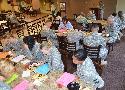
FORT HOOD, Texas—Carl R. Darnall Army Medical Center honored its more than 900 nursing staff members during national Nurses Week as they celebrated with a series of fun and educational events.
National Nurses Week begins each year on May 6, also known as National Nurses Day, and ends on May 12, the birthday of Florence Nightingale, the founder of modern nursing. The purpose of the weeklong celebration is to raise awareness of the value of nurses and the critical role they serve in saving lives and improving patients’ health.
“Nurses have direct impact on the outcome of the health of patients and we’re seeing a positive culture change as we practice patient-centered care throughout Army medicine,” Col. Brian Kondrat, deputy commander for Nursing and Patient Services, said in his remarks at the Nurses Week kickoff ceremony. “What you do every day resonates with our patients.”
This year’s theme “Ethical Practice, Quality Care” emphasizes the need to sustain safe, competent, ethical environments to ensure positive patient outcomes. The theme also fits with Army Medicine’s Patient Caring Touch System’s value of the month--advocacy.
“When you speak out on behalf of the patients you serve, you are advocating for that patient. It’s about promoting patients’ rights, ensuring patients’ needs are met and following standard procedures and medical ethics,” Kondrat said. “Ethical practice means to show courage to report any mistakes or errors early and often. By reporting events in a timely manner we can change systems and processes to make it safer for all and improve outcomes for patients.”
Nursing is the nation's largest health care profession with nearly three million employed professionals. The nursing staff at Darnall includes registered nurses, licensed practical nurses and nurse practitioners who work in clinics, managed care, behavioral health, education and training, public health, and quality management. They are advocates for quality care in various roles ranging from direct care, educator, researcher, and administrator and fill many job roles such as nurse navigators, care coordinator specialists and nurse wellness coaches.
In her 29 years as an Army nurse, Col. Ann Blunt, chief, Maternal-Child Health Nursing, has seen many changes.
Blunt was a civilian nurse for two years before receiving a direct commission and transitioning to Army nursing. Since her first duty assignment at Fort Bliss, she has served in different departments and clinics at a variety of posts around the world.
“The biggest changes, of course, are in technology. I think one of the most positive changes is Army medicine’s focus on patient-centered care. We’ve always said it but now we have practices and policies in place which support it,” Blunt said.
Capt. Amy Hammock, clinical nurse officer-in-charge, Labor and Delivery, agreed with Blunt, adding that the Army does a good job about adhering to standards to ensure the best possible care for patients.
A former enlisted Soldier, Hammock used the GI Bill to get her degree in nursing and then spent most of her civilian career at Scott and White Hospital working in the emergency room, surgical trauma unit and Labor and Delivery department.
“Having been both a civilian and a military nurse, I can say that the care and services we provide are the same. The big difference I see is that the Army exceeds the standards on providing positive outcomes for patients,” Hammock said. “If there’s an incident or finding reported, immediately they are on it investigating and implementing steps to ensure that it doesn’t happen again. It’s all about keeping the patients and families healthy and safe.”
--30--
-
April 30, 2015 CRDAMC earns Texas Ten Step designation
By Patricia Deal, CRDAMC Public Affairs
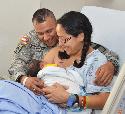
FORT HOOD, Texas – Carl R. Darnall Army Medical Center has taken a giant step towards improving the health of newborns and infants by earning the Texas Ten Step Program Star Achiever facility designation from the Texas Department of State Health Services.
The Texas Ten Step Program encourages breastfeeding as the preferred method of feeding for newborns and infants and is part of a five-year quality improvement project aimed at reversing the low percentage of Texas mothers who exclusively breastfeed for six months.
CRDAMC, the first Army Medical Center in Texas to earn this distinction, joins a growing number of Texas birthing facilities that are supporting new mothers and their decision to breastfeed. The goal of the Texas Ten Step Program is to increase breastfeeding initiation rates to 82 percent.
“With almost 3,000 births yearly, we have to concentrate on providing the best evidence-based, mother-baby care we can,” said Col. Patricia Darnauer, CRDAMC Commander. “We have worked very hard to become a Texas Ten Step Star Achiever and are proud to join the other select Texas hospitals in promoting breastfeeding to our new mothers.”
Research shows that breastfeeding is the best option for moms and babies, ensuring babies receive the critical nutrients and antibodies that help them thrive and protect them from germs and reduce risk of illness such as asthma, childhood obesity, diabetes and other infections.
Still, many women have concerns or fears that lead them to choose not to breastfeed.
“Many mothers simply aren’t aware of the benefits of breastfeeding or may not know how to get started. Breastfeeding may not always be as simple and easy to do as many think,” said Tara Haberl, a CRDAMC nurse educator and an International Board Certified Lactation Consultant. “We want our mothers to know that we are here to help them every step of the way. We offer a wide variety of support, with hands-on training and education.”
CRDAMC has lactation consultants in the Mother/Baby Unit, the Women’s Health Center and the Newborn Follow-Up Clinic. Education starts at mom’s initial visits and breastfeeding classes are offered every month. A new parent support program is also available that provides free in-home breastfeeding support, parenting skills support and child development information.
Another thing that has helped increase breastfeeding rates, Haberl added, is the ‘Skin to Skin’ practice, best-evidence based care where the newborn is placed on mom’s abdomen for its first hour of life.
“We are already seeing success from all of our efforts to increase breastfeeding,” said Lt. Col. (Dr.) Christine Laky, medical director of Labor and Delivery and assistant chief, OB/GYN. “Women, Infant and Children (WIC) data shows we have highest rates of initiation and continuation of exclusive breastfeeding. We meet or exceed national averages and exceed the average rates for this area.”
Having earned the Texas Ten Step Star Achiever designation, the next step is for CRDAMC to become certified as a Baby-Friendly Hospital, a World Health Organization (WHO) and United Nations Children’s Fund (UNICEF) worldwide program that certifies hospitals and birthing centers with an optimal level of care for infant feeding and mother/baby bonding.
--30--
-
FORT HOOD, Texas – Fort Hood residents will have the opportunity to surrender expired, unwanted or unused pharmaceutical controlled substances and other medications during the National Prescription Drug Take-Back Day event April 24 - 25 from 9 a.m. to 5 p.m. at the Carl R. Darnall Army Medical Center Main Pharmacy and the PX Refill Pharmacy.
Patients can bring all expired and unused medication to the pharmacy. The pharmacy will issue patients a Drug Enforcement Agency (DEA) approved, prepaid envelope to put the medication into and seal shut. Patients can then drop off the envelope at any U.S. postal office mailbox or give to their mail carriers.
Envelopes will only be given to patients who bring their expired medication directly to the pharmacy. Each pharmacy has the ability to assist up to 50 patients each.
The National Prescription Drug Take-Back Day initiative addresses a vital public safety and public health issue, enabling Americans to clean out their medicine cabinets - a crucial step toward reducing the prescription drug abuse that is plaguing the nation. Per the DEA, Americans have turned in more than 4 million pounds of prescription drugs to date for safe and proper disposal through National Prescription Drug Take-Back Day programs.
-
March 18, 2015 CRDAMC hosts Social Work Symposium
FORT HOOD, Texas – As part of Social Work Month, Carl R. Darnall Army Medical Center’s Department of Behavioral Health will hold a symposium for all Fort Hood behavioral health providers, military and civilian, March 27 at the Fort Hood Events Center and Bingo Hall.
The theme of the event is “Joint Social Work Community: Serving Those Who Serve” and will feature opening remarks by Col. Patricia Darnauer, CRDAMC commander; plus presentations from Army and Navy social work consultants, an Air Force social work representative and the Chaplain.
There will be two professional development and staff training sessions with each session offering three continuing education units (CEUs). The morning session is from 8-11 a.m. and the afternoon session is from 12-3:30 p.m.
For more information or to RSVP, contact Family Advocacy Program at (254) 286 - 6562.
--30--
-
March 13, 2015 TBI Clinic holds open house
FORT HOOD, Texas – Carl R. Darnall Army Medical Center’s Traumatic Brain Injury (TBI) Clinic will hold an education and awareness open house from 11 a.m. to 2 p.m. March 19 at building 40022 on Support Ave.
The public is invited to attend and learn more about concussion and brain health and how the clinic is helping Soldiers and their families deal with the effects of TBI. There will be several displays and interactive education booths, demonstrations and guest speakers. Representatives from post and community behavioral health resources will also be on site.
Media interested in covering this event should R.S.V.P. with the CRDAMC Public Affairs Office by calling (254) 288-8005 or (254) 288-8087 by 1 p.m. Wednesday, March 18 for gate time.
–30 –
-
March 9, 2015 Fisher House receives facelift

By Patricia Deal, CRDAMC Public Affairs
FORT HOOD, Texas – The Fort Hood Fisher House just got a lot homier thanks to a $250,000 remodel project and the charitable efforts of the Red River Company, an IT services provider to the U.S. government and Department of Defense (DoD).
The Fisher House is a "home away from home" for military personnel (both active and retired) and their families during a medical crisis. The house has a warm, compassionate environment where families and caring friends can nurture one another in times of need.
“It’s important for us to have the families’ stay at our house be as comfortable and stress-free as possible. We’ve redone the house from top to bottom and now are proud to provide an even more amazing, comfortable place that our families can call home during their stay,” according to Theresa Johnson, director of the Fort Hood Fisher House.
The project, which began last month, is the first major renovation to the house since it opened in 1998. The Fisher House has been closed during the remodel yet is continuing to support families through the foundation’s Hotels for Heroes program, which uses donated hotel points to put families in hotels in the community. Plans are to reopen the beginning of April.
The Army Fisher House Foundation covered the cost of new floors and furniture, and the Red River Company donated more than $15,000 of computers, appliances and supplies and material.
Plus, more than a hundred employees from the New Hampshire-based company, who were in Austin for their annual sales conference, came to Fort Hood Feb. 19 pitching in the labor to complete the renovations. They painted, installed new appliances, counters and fixtures and even built a concrete patio for the new gas grill they donated.
“Philanthropy is in our company’s DNA and it’s an integral part of what we do. This year we were happy to be able to give back to the military community,” said Rick Bolduc, Red River’s CEO. “It was especially heartwarming knowing that everything we do here will have an impact on families in their time of need.”
That commitment to provide the best possible support and dedication for military members, veterans and their families is the premise behind the Fisher Foundation, Johnson said.
“They deserve the best and this is one way we can help,” she said. “We can’t do this without community involvement. We’re grateful for everything that organizations such as Red River have done to support us.”
–30 –
-
March 9, 2015 CRDAMC nurses pursue Doctorate of Nursing Practice
By Patricia Deal, CRDAMC Public Affairs
FORT HOOD, Texas— Three Carl R. Darnall Army Medical Center Army nurses are striving to take their careers to the next level—the highest level now available to nurses.
The Uniformed Services University of the Health Sciences in Bethesda, Md., transitioned its two-year master’s degree program to a three-year Doctorate of Nursing Practice (DNP) program early in 2014. Service-members that have been selected to the program spend the first two years at the University and then for the last year, Phase II, they are assigned to a military medical center for a hands-on learning experience in a clinical setting.
Capt. Holly Archer and Majors Kelley Togiola and Tommy Thompson began their DNP Phase II education in April at Darnall, one of five Phase II sites. All three will become Family Nurse Practitioners.
“It is an intensive program preparing them to provide primary healthcare. Our students will complete more than 1,700 hours of clinical training in preparation to be responsible for a full panel of approximately 1,300 patients once they graduate,” said Lt. Col. John Meyer, Clinical Assistant Professor and Site Director at CRDAMC. “Their training is comprehensive as they spend blocks of their time rotating through the various specialty clinics and departments such as Podiatry, Women’s Health, Physical Therapy, Occupational Health, Orthopedics and Radiology.”
As part of the Phase II program, the students are assigned to a provider at a Patient Medical Home, who becomes the students’ preceptor, and is responsible for training and mentoring them in all aspects of clinical practices and daily patient care.
“The nurse practitioners, physician assistants and physicians who precept our students have much to offer in the way of clinical expertise. The experience and knowledge they voluntarily share with our students is invaluable,” Meyer said.
A unique highlight for the nurses in the DNP program here, according to Meyer, is that they are able to do two-week rotations at the Department of Veteran’s Affairs hospital in Temple, Texas.
“The typical patient population in the Darnall health system is younger. By developing this collaborative arrangement, our students have the opportunity to spend time managing patients who are older, thus giving them experience with illness and conditions that present in older adults. It is truly a valuable bit of experience for them. Sharing that knowledge resource between two Federal healthcare systems here in Central Texas makes a lot of sense these days.”
In addition to the daily work in the clinics, students are also required to complete a Scholarly Inquiry Project and 16-20 credit hours of course work.
Maj. Kelley Togiola, who is doing her training at Killeen Medical Home, said she is very happy to have been selected for the program.
“I really like it. It’s a great combination of academics and experience. I’m learning such a broad scope of things,” she said. “Rotating through the different specialties and the training at the VA hospital has been invaluable in giving me a well-rounded experience.”
Working closely with her preceptor and those at the various clinics also adds to her education, she said, as she benefits from their personal tips and advice on taking care of patients.
“I enjoy patient care and this program allows me to see what a higher-level relationship with patients looks like,” she said.
--30--
-
January 22, 2015 Robertson Blood Center to host Donor Recognition Ceremony
FORT HOOD, Texas – Robertson Blood Center will honor the past year’s top individual and unit blood donors at its annual Donor Recognition Ceremony Jan. 26, 11:30 a.m., at Club Hood. III Corps and Fort Hood Deputy Commander Maj. Gen. Kendall Cox will be the guest speaker.
January is National Blood Donor Recognition Month, a time set aside to specifically thank donors and raise community awareness about the ongoing blood donation mission.
“We are grateful to our donors, but also want others to know we still need blood,” said 1st Lt. Sarah Matthews, director, RBC. “We are always in need of more donors. Everyone—Soldiers, civilians working on post, family members, retirees—can all donate blood at RBC.”
The public is invited to attend the ceremony, which will include special awards and recognitions, information on donating, music by the 1st Cavalry Ensemble and refreshments.
Media interested in covering this event should R.S.V.P. with the CRDAMC Public Affairs Office by calling (254) 288-8087 or (254) 338-6087 by 4 p.m. Friday, Jan. 23 for gate time.
-
December 22, 2014 CRDAMC announces Holiday hours
FORT HOOD, Texas – Carl R. Darnall Army Medical Center and its primary care clinics will be closed in observance of federal and training holidays on Thursday, Dec. 25; Friday, Dec. 26; Jan. 1, and Jan. 2, 2015.
Thomas Moore Health Clinic will be open on Jan. 2, 2015.
Darnall and all its clinics will resume normal operating hours on Jan. 5, 2015.
Beneficiaries with urgent care needs should report to CRDAMC Emergency Department.
The Patient Appointment System will not be available for Dec. 25 and 26; and Jan. 1, 2015. Patients will be given the menu option for acute care and directed to 1-800-TRICARE (the nurse advice line). The PAS will be available Jan. 2, 2015.
Nurse Advice Line
The Nurse Advice Line is available 24 hours a day to provide information on urgent health issues, guidance for non-emergency situations, and instructions for self-care for minor injuries and illnesses and assistance with scheduling appointments. Tricare beneficiaries may speak to a registered nurse on the nurse advice line by calling 1-800- TRICARE (874-2273) Option 1.
Pharmacies
The hospital and clinic pharmacies will be closed Dec. 25; Dec. 26; Jan. 1 and Jan. 2, 2015. The hospital pharmacy will be open only for emergency room/hospital discharge patients 8:30 a.m.-2 a.m. on all days.
The Refill Pharmacy located at Clear Creek PX, will be closed only on Dec. 25 and have normal operating hours the rest of the days.
All pharmacies will maintain normal hours on Jan. 5, 2015.
--30--
-
December 16, 2014 Fort Hood families foster future K9 heroes
FORT HOOD, Texas—They arrived at Fort Hood a little nervous, a bit curious and a lot anxious to start their extended stay at the Great Place with their new families.
Seven Belgian Malinois and Dutch shepherd puppies from the latest litter of the Department of Defense’s Military Working Dog Breeding Program at Lackland Air Force Base, Texas, met their foster families Dec. 12 during orientation at the Fort Hood Military Working Dog Kennel.
The breeding program, administered by the 341st Training Squadron, provides working dogs to every service branch and is among the largest military breeding programs in the world. The squadron’s Military Working Dog Training Program teaches the dogs how to patrol and detect drugs and bombs for specialized missions both stateside and overseas.
Not every puppy born in the program makes it all the way through. From birth on, the dog is evaluated for characteristics that would indicate its potential to be a successful military working dog. At about eight weeks of age, puppies showing potential are then placed in a foster home, where they stay for about five months.
“Fostering is an important part of the military working dog’s life. The dogs are exposed to a variety of environments. The families take the dogs everywhere--to stores, to school, to work. They are socialized with other people and other animals. They are exposed to different sounds and situations,” said Renae Johnson, volunteer coordinator at Fort Hood. Johnson, who retired from the MWD Training Center, helped find families in this area to foster the puppies.
She is fostering FFlint II, offspring of one of the past fosters she’s had. All DoD military working dogs are given names with double-initials.
Normally the foster program has limited its families to those living within a two-hour drive from Lackland Air Force Base to ensure the puppies can be monitored by the 341st and receive their care by DoD veterinarians there.
The Fort Hood Veterinary Center can provide the emergency and routine medical care to the foster puppies so it made sense to expand the foster care program to this area.
“We’re excited to add the DoD working dogs program’s fosters to our mission. We could end up seeing a foster puppy again if it graduates and then gets assigned to Fort Hood. It’s fulfilling to know that we’ve helped care for a puppy that comes back as an important part of our team of working dogs,” said Capt. Dawn Hull, branch chief at the Fort Hood Veterinary Center. The center’s mission is to provide food defense and safety for the installation and medical care for Fort Hood’s military working dogs and horses. The staff also provides veterinary services to the pets of authorized military beneficiaries.
Being able to expand the foster program outside of the San Antonio area helps expand the program’s capabilities yet keeps the costs of the program manageable, according to Tracy Cann, breeding program foster consultant for the DoD MWD Center.
“While we have many qualified foster homes, our puppy production is going up so it’s always a good idea to recruit more foster families. We have a litter going out right after New Year’s and then another one in mid-February. There will certainly be more opportunities coming up for Fort Hood families to foster,” Cann said.
There are certain requirements to become a foster family for the DoD MWD, Cann added. Families should have a home with a yard. Preferably families should not have children younger than four years old. Families have to have time and patience to raise a young puppy from twelve weeks to six months of age and have the desire and interest to learn how to raise a future military working dog.
“It’s not so much about obedience,” Cann explained to the new fosters, “as it is about expanding the puppies’ horizons. It’s all about exposing them to noises, new places, people, animals. It’s about letting them be sociable, not overly aggressive, and eager to play with toys and balls.”
Then families must be able to part with the puppy after of it’s been a part of your family for six months.
That’s not always easy to do.
As Ggladys squirmed with excitement in her lap, Jessica Blanchard thought about having to give her up at the end of the foster period.
“We’ll just foster another one then,” she said, laughing. “I’m just really excited to do this. I love dogs. And I know how important working dogs are to the Army.”
Her husband, Sgt. 1st Class Randy Blanchard, is a kennel master with the 226th Military Working Dog Detachment here. They already have a mutt and a springer spaniel, a retired military working dog they recently adopted. This is the couple’s first time fostering a puppy.
Families interested in becoming a foster family for a DoD MWD Breeding program puppy can find more information here: http://www.37trw.af.mil/units/37traininggroup/341sttrainingsquadron/index.asp.
--30--
-
November 24, 2014 CRDAMC announces Holiday hours
FORT HOOD, Texas – Carl R. Darnall Army Medical Center and its primary care clinics will modify operating hours in observance of the Thanksgiving holiday, Nov. 27-28. The hospital remains open every day for emergency services, inpatient care, and labor and delivery services.
Thursday, Nov. 27 – Thanksgiving Day
All CRDAMC primary care clinics and pharmacies will be closed.
Beneficiaries with urgent care needs should report to CRDAMC Emergency Department.
Friday, Nov. 28
Thomas Moore Health Clinic will maintain normal clinic hours Friday, Nov. 28.
All other primary care clinics will be closed.
Darnall and all its clinics will resume normal operating hours on Monday, Dec. 1, 2014.
Patient Appointment Service
The Patient Appointment System will not be available Nov. 27 and 28.
Beneficiaries should call the Nurse Advice Line at 1- 800-TRICARE (874-2273) for assistance with urgent health issues and scheduling appointments.
Pharmacies
All pharmacies will be closed Nov. 27.
The Refill Pharmacy located at Clear Creek PX and Thomas Moore clinic pharmacy will be open Nov. 28.
Nurse Advice Line
The Nurse Advice Line is available 24 hours a day to provide information on urgent health issues, guidance for non-emergency situations, and instructions for self-care for minor injuries and illnesses and assistance with scheduling appointments. Tricare beneficiaries may speak to a registered nurse on the nurse advice line by calling 1-800- TRICARE (874-2273) Option 1.
--30--
-
November 13, 2014 Joint VA/DoD sleep center ribbon cutting ceremony set for Friday
FORT HOOD, Texas – Carl R. Darnall Army Medical Center, in conjunction with the Central Texas Veterans Health Care System, announce the official opening of a new sleep center in Killeen. The Central Texas Sleep Center is a joint Department of Veterans Affairs and Department of Defense initiative to improve access for active duty Soldiers and Veterans who need sleep studies.
Col. Patricia Darnauer, commander, Carl R. Darnall Army Medical Center and Ms. Sallie Houser-Hanfelder, director, Central Texas Veterans Health System will be among the officials at an informal Ribbon Cutting ceremony Friday, Nov 14 from 11:00 a.m. to noon at 3401 Kaydence Court.
Attendees will be able to meet staff and tour the new center after the ceremony.
Media interested in attending this event should call Carl R. Darnall Army Medical Center, Public Affairs Officer at 245-288-8005 or the Central Texas Veterans Health Care System, Public Affairs Officer at 254-743-2376 or 254-534-0304.
--30--
-
October 31, 2014 Fisher House Hero & Remembrance Run, Walk or Roll set for Nov 1
FORT HOOD, Texas – The Fisher House will host the Hero & Remembrance Run, Walk, or Roll Nov. 1 at III Corps and Fort Hood Headquarters from 6-9 a.m. Opening ceremonies will begin at 6:15 a.m.
There is no cost to attend and the event is open to the public. Non-military ID card holders may get a day pass for Saturday at the Visitor Center.
Boots bearing pictures of Fallen Service Members will line the 5K route on the day of the event. After the event, they will be displayed at III Corps Headquarters for one week.
Media interested in attending the event should meet CRDAMC Public Affairs at the main gate at 5:30 a.m. -
October 24, 2014 CRDAMC Retiree Health Fair set for November 1
FORT HOOD, Texas – Carl R. Darnall Army Medical Center’s 40th Annual Retiree Health Fair will be held here Nov. 1 at the Thomas Moore Health Clinic, 58th Street and 761st Tank Battalion Ave.
Representatives from various CRDAMC clinics and departments will be on hand from 9 a.m. to 2 p.m. dispensing information, conducting screenings, and answering questions for Retirees and their families.
There will be booths and information on topics such as tobacco cessation, nutrition, complementary and alternative medicines, diabetes, asthma, Team Up in your health care, women’s health, pharmacy, physical therapy, substance abuse and behavioral health.
Retirees will be able to take advantage of health care screening opportunities such as glucose level, blood pressure and weight checks.
They can also get the seasonal flu vaccine. Tetanus and Zostavax shots will also be available. To receive the Zostavax immunization, a vaccine that helps prevent shingles in individuals 50 years and older, Retirees must bring a note signed by their primary care provider stating there are no contraindications for the individual to receive the shot. Vaccines will not be available for children of retirees attending the health fair.
DENTAC will provide oral cancer screening services and have an information table set up at the health fair.
For more information, contact the Health Promotion & Wellness Program at (254) 288-8488.
Media interested in covering the event should contact CRDAMC Public Affairs at (254) 288-8005 no later than 4:30 p.m. Thursday, Oct. 30 for gate time.
-30-
-
FORT HOOD, Texas – Carl R. Darnall Army Medical Center will offer bundles of information, education and community resources for expectant mothers and new parents at its Baby Expo Oct. 25 from 10 a.m. – 2 p.m. at the hospital’s main entrance.
CRDAMC OB/GYN doctors, midwives and nurses, plus vendors from Fort Hood and the surrounding communities, will be on hand to discuss a wide range of topics like pregnancy, labor and delivery, car seat safety, infant education and what to expect during the first year after birth.
According to 1st Lt. Rebeccah Sherman, an Army nurse who works in CRDAMC’s Labor and Delivery Department, the event will be an excellent opportunity to have some fun and find out all about pregnancy and early parenting.
"The Baby Expo shows the community that CRDAMC supports the maternal child community in central Texas. The event serves to connect expectant and new mothers with education, on-post resources, and resources throughout the community," she said.
In addition to the booths and service information, Sherman said there will be many family-fun activities throughout the day such as door prizes and giveaways, tours, yoga demonstrations and face painting and a bouncy house for children.
The Baby Expo is open to anyone; non-ID card holders need to get a pass at the post’s visitor center.
For more information about this event or other CRDAMC opportunities please visit our website at: http://www.crdamc.amedd.army.mil/default.asp?page=index.
-30-
Media interested in attending the ceremony should contact CRDAMC Public Affairs at 254-286-7954 or 254-288-8005 no later than 12 p.m. Friday Oct. 24 for meeting time and location.
-
October 7, 2014 CRDAMC to host annual Walk to Remember
FORT HOOD, Texas – Carl R. Darnall Army Medical Center will host the third annual Walk to Remember at 3:30 p.m., Oct. 16, at the Fort Hood Spiritual Resiliency Center.
Walk to Remember is a special event to connect parents and families together to express grief and remember our babies, and to raise awareness.
October is National Pregnancy and Infant Loss Awareness month. Each year memorial ceremonies are held across the nation to bring awareness to the difficult issues of miscarriage, ectopic pregnancy, stillbirth and neonatal death.
“While we cannot take away the pain of loss, we can all help to ease the pain by providing a day to remember their child, grandchild, niece, nephew or dear friend’s child,” Russell said.
“While walk participants share a common grief, the Walk to Remember” is not a sad event.
“Together we celebrate and remember our babies in a gentle, joyous environment,” Russell said.
This year’s event will feature a memorial ceremony, “remember when” card commemoration, group walk, sweet treats and wonderful friends.
-30-
-
October 6, 2014 TRICARE offers different options for Families
By Patricia Deal, CRDAMC Public Affairs
FORT HOOD, Texas—When it comes to their health and the health of their family, everyone needs to make informed decisions to ensure they receive the best care possible.
Recent enhancements to TRICARE Prime have made it that much easier for them to manage their health care, according to Beneficiary Services professionals at Carl R. Darnall Army Medical Center.
“There are many options with TRICARE, depending on your status and geographical location. It can be confusing so we want to be sure that our beneficiaries understand all their options and then choose what works best for them,” said Stacy Perez, chief, Beneficiaries Service Branch.
There are two options to TRICARE, Prime and Standard. Active duty Soldiers must enroll in TRICARE Prime, while their family members can choose between the two options.
With TRICARE Prime, enrollees generally receive most of their routine care from a selected or assigned primary care manager (PCM) at one of CRDAMC’s patient-centered medical homes.
TRICARE Standard is a fee-for-service option that gives beneficiaries the opportunity to see any TRICARE-authorized provider.
“The most important difference is cost. With Prime for Active Duty family members, there are no deductibles, enrollment fees, or co-pays, and it still gives you access to quality, patient-centered care,” said Perez.
Plus, Prime offers enrollees some extra advantages that are not available to Standard users, Perez explained, such as TRICARE Online, the Army Medicine Secure Messaging Service and the Nurse Advice Line.
TRICAREONLINE gives enrollees the ability to schedule, view and cancel appointments, refill prescriptions and view lab and radiology results. The Army Medicine Secure Messaging Service adds to those features by giving enrollees access to self-care advice and the ability to leave a secure message for their provider.
Enrollees can call the Nurse Advice Line 24/7 to receive medical advice from a registered nurse. If the nurse determines that the caller needs to be seen by a medical provider, the nurse can book the appointment for the caller.
TRICARE Standard is an option which allows enrollees to choose their own doctor. They can see any type of doctor, from a specialist to a primary care physician. Enrollees pay for care until they meet their deductible, then pay a cost-share until they meet their catastrophic cap. Cost-shares vary depending on care received and whether or not the enrollee used a network or non-network doctor. Visit the TRICARE site to get the most updated deductible rates.
“Everyone has to make their own choice depending on their needs. With the TRICARE Service offices now being gone, we are trying to promote awareness and help educate our beneficiaries about TRICARE,” Perez said. “For instance, we’ve been reaching out to our family members and found that many didn’t know they were eligible to enroll in Prime. Once they knew all their options, we had many switch their enrollment to Prime. It’s just a matter of getting all the facts so you can make an informed decision.”
--30--
For more information on TRICARE options:
www.tricareonline.com
www.crdamc.amedd.army.mil/TRICARE/
TRICARE customer service: 1-800-600-9332
Nurse Advice Line 1-800-874-2273
Events
December 13, 9 a.m.